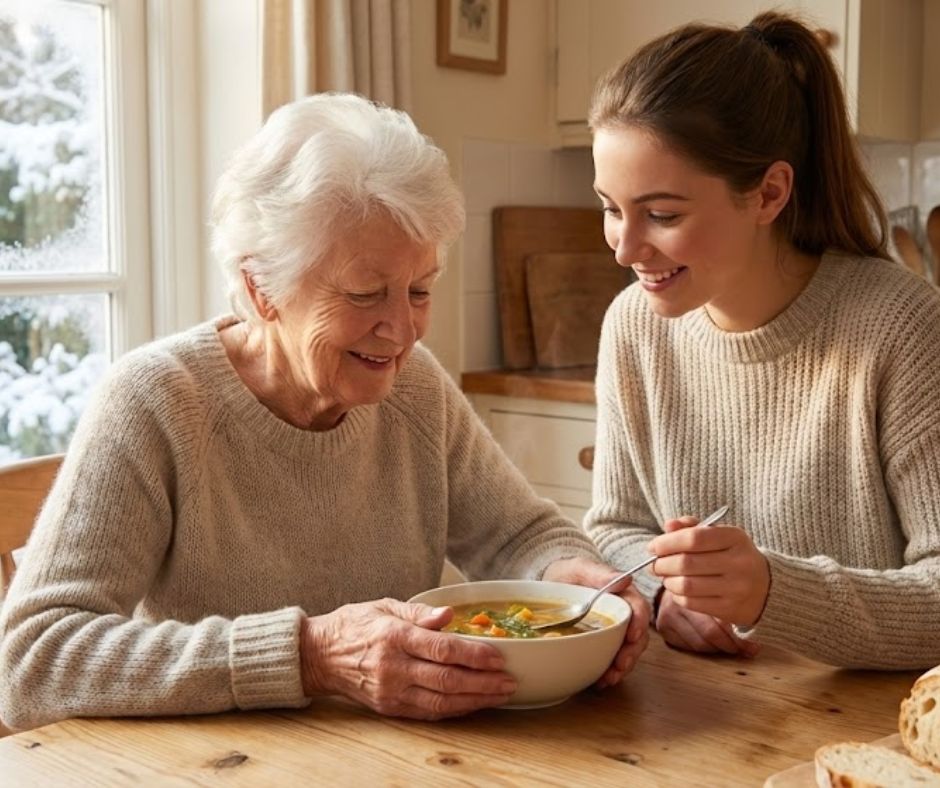
The British winter has a way of settling in your bones. Those grey afternoons in Surrey and South London often call for more than just a heavy coat. When the frost bites, your body craves fuel that does more than just fill a gap. It needs nourishment that stokes the inner fire. For many of our older neighbours, eating well during January is about more than nutrition. It is about staying resilient against the seasonal chills.
The Magic of the Stock Pot
A bubbling pot on the stove changes the atmosphere of a whole house. It provides a humid warmth that helps you breathe easier in the dry, heated air. Soup is a brilliant vehicle for vitamins. You can throw in those slightly soft carrots or the ends of a celery bunch. Everything softens into a digestible, comforting bowl of goodness.
We often encourage our clients to try “super-soups.” This involves blending lentils or beans into a classic vegetable broth. This adds a punch of protein without the need for tough meats. It is gentle on the stomach and easy to swallow. A thick leek and potato soup or a spicy parsnip blend can lift the spirits. These meals provide the energy your body needs to maintain a steady temperature.
Staying hydrated is also a challenge when it is cold. You might not feel thirsty like you do in July. However, your body still loses moisture. Savoury broths and herbal teas are excellent ways to keep your fluid levels up. They keep your skin hydrated and your mind sharp. A warm mug in your hands also serves as a lovely hand-warmer on a misty morning.
Small Bites for Big Energy
Sometimes, a full three-course meal feels like a mountain to climb. Appetite can dip when you spend more time indoors. In these moments, we suggest “grazing” on high-quality snacks. A piece of toast with mashed avocado or a small bowl of porridge works wonders. These small portions are easier to manage but still provide vital calories.
Vitamin D is the “sunshine vitamin,” and we see very little of it this month. Since the sun stays hidden behind the clouds, we must find it in our food. Oily fish like sardines or salmon are fantastic choices. Eggs and fortified cereals also help keep your bones strong. We help our clients prepare these simple dishes to keep their immune systems in top shape.
A little bit of what you fancy does you good, too. A square of dark chocolate or a baked apple with cinnamon provides a sense of luxury. These treats stimulate the senses and make the long evenings feel a bit shorter. Food should be a source of pleasure, not just a daily chore. We find that a bit of cinnamon in the morning oats makes the whole kitchen smell like a bakery.
The Social Side of the Kitchen
A meal eaten alone rarely tastes as good as one shared with a friend. The act of chopping vegetables together can be a wonderful way to spend an hour. Our carers often use meal preparation as a time for a proper catch-up. We chat about the news or old family recipes while the onions sizzle. This social interaction is just as important as the food itself.
When the cupboard looks bare, the motivation to cook often vanishes. We assist by checking that the pantry stays stocked with the essentials. Having a few tins of quality plum tomatoes or bags of frozen peas makes a quick meal easy. It removes the stress of wondering what to eat. When the logistics are handled, the joy of eating returns.
Eating well is a form of self-care that pays dividends in how you feel. It keeps the winter blues at bay and gives you the strength to enjoy your day. A warm heart often starts with a warm belly. We are always ready to pull up a chair and help you prepare something delicious.