There’s an old saying that good neighbours are worth more than distant relatives. And while family ties are precious, there’s something uniquely powerful about the person who lives just next door, or a few houses along the street. For older adults living at home, a good neighbour isn’t just a pleasant bonus — they can be a genuine lifeline. Community connections, however small they might seem, play a remarkable role in supporting health, happiness, and a sense of belonging.
The Quiet Crisis of Loneliness
Loneliness among older adults is one of the most significant — and most underreported — health challenges of our time. Studies have consistently linked chronic loneliness to increased risks of depression, cognitive decline, high blood pressure, and even a shorter life expectancy. Yet it remains something many people feel reluctant to talk about, perhaps because admitting loneliness carries an unfair stigma.
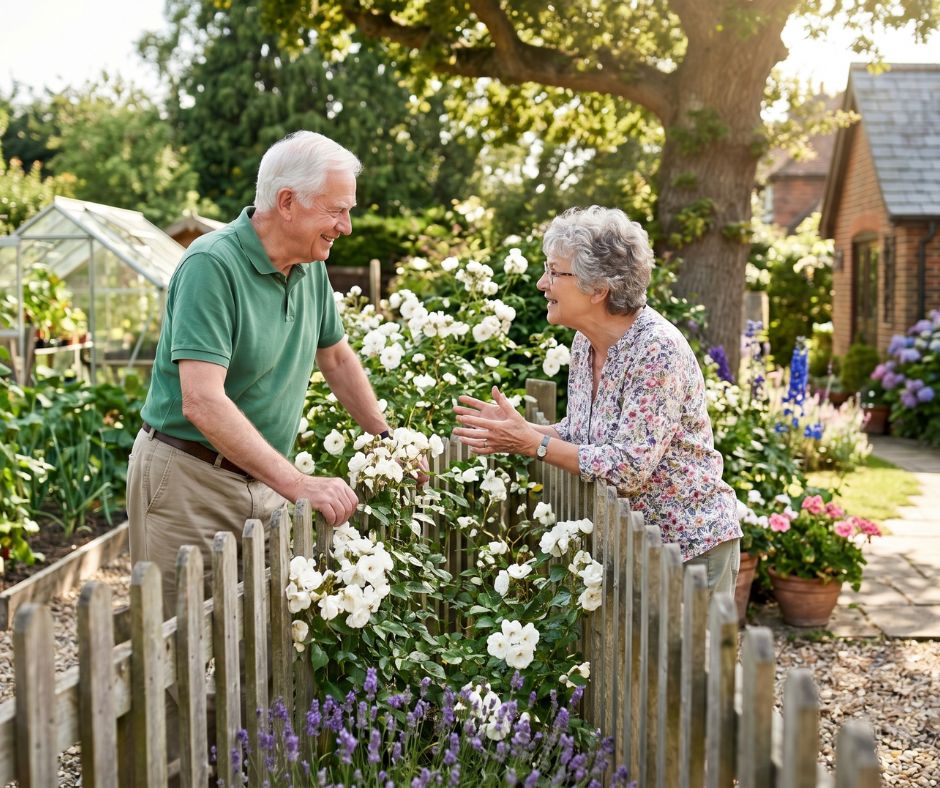
The good news is that meaningful connection doesn’t require grand gestures or busy social calendars. Sometimes, it begins simply with a familiar face at the garden gate.
What a Good Neighbour Actually Does
It doesn’t take much to make a profound difference in someone’s day. A good neighbour might take in a parcel, notice that the curtains haven’t been opened, offer a lift to an appointment, or simply pause for a ten-minute chat over the fence. These moments may seem trivial to the person offering them. To the person receiving them, they can represent the difference between a day that felt connected and one that felt entirely alone.
For older adults living independently, neighbourly relationships also provide an informal layer of safety and reassurance — both for the individual and for their family members who may worry from a distance. Knowing that someone nearby is keeping a gentle, unobtrusive eye out can bring enormous peace of mind all round.
The Health Benefits of Social Connection
The evidence for the wellbeing benefits of community connection is compelling. Regular social interaction — even brief, casual exchanges — has been shown to improve mood, sharpen mental alertness, and reduce feelings of anxiety. Conversations stimulate the brain in ways that solitary activities simply cannot replicate. Even a short exchange at the front door activates memory, language, and emotional processing.
Beyond the mental benefits, feeling part of a community gives older adults a sense of purpose and identity. When your neighbours know your name, notice your absence, and genuinely care whether you’re well, it reinforces something deeply important: that you matter, that you are seen, and that you belong.
Building Connection When It Doesn’t Come Naturally
Not everyone is fortunate enough to have warm neighbourly relationships already in place — and for those who have moved, lost a long-term partner, or simply found that old connections have faded, building new ones can feel daunting. But community connection rarely requires dramatic effort. Small, consistent steps tend to work best.
A smile and a hello on the way to the door. A note through a neighbour’s letterbox when you notice they might need help. Joining a local group — a walking club, a community garden, a church or faith group — where familiar faces become regular ones. Even asking a neighbour’s name, and remembering it, is a quiet act of community-building.
For families and carers supporting older loved ones at home, encouraging and facilitating these connections is one of the most valuable things you can do. Helping someone feel embedded in their community is not a small thing — it is, quite genuinely, an act of care.
Community doesn’t always look like organised events and busy social diaries. Often, it looks like a neighbour who waves good morning, a familiar voice asking how you’re getting on, or someone who simply notices when things seem a little quieter than usual. At Lakeshore Care, we understand that truly good care extends beyond the front door — and that helping the people we support feel connected to the world around them is at the heart of everything we do.