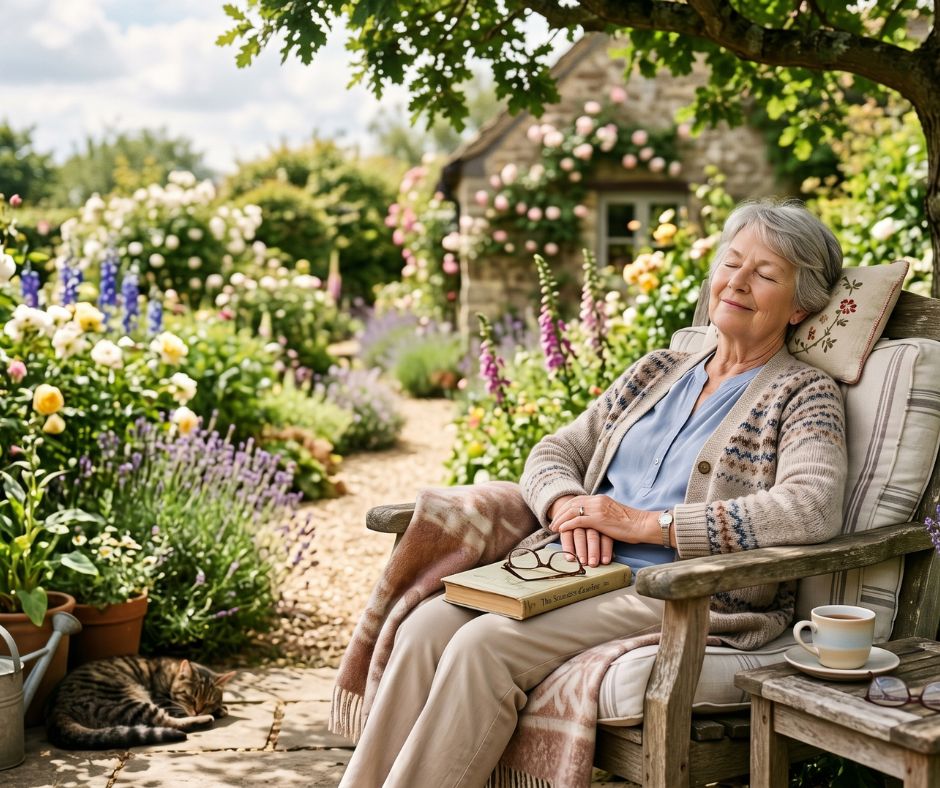
In a world that never stops moving, doing nothing can feel almost rebellious. We’re surrounded by the idea that every moment should be productive — that idle hands are wasted hands. But what if doing nothing is actually one of the best things you can do for your health and happiness? For older adults especially, the art of restful stillness is not laziness. It is, in fact, a skill worth cultivating.
What Does “Doing Nothing” Actually Mean?
Doing nothing doesn’t mean staring blankly at a wall (although there’s nothing wrong with that either). It means allowing yourself time without agenda — no tasks, no targets, no screen demanding your attention. It might look like sitting quietly in a garden, watching the clouds drift by, or simply resting in a favourite chair with a cup of tea and no particular plan. The key is permission: giving yourself genuine leave to simply be.
For many people who spent decades raising families or building careers, this kind of unstructured time can feel deeply unfamiliar. There may even be guilt attached to it. But that guilt is worth examining — and gently letting go.
The Real Benefits of Rest and Quiet Time
Research into rest and relaxation consistently shows that downtime is essential for both mental and physical health. Here’s why embracing a little stillness can make a meaningful difference:
It gives your brain a chance to process. When we’re constantly busy, our minds don’t get the opportunity to consolidate memories, reflect on experiences, or simply settle. Quiet time allows the brain to do its background work — and that’s enormously beneficial for cognitive health as we age.
It reduces stress hormones. Chronic busyness keeps the body in a low-level state of stress. Restful, unhurried time has been shown to lower cortisol levels, which in turn supports heart health, immune function, and sleep quality.
It improves mood. There’s a reason a quiet afternoon can leave you feeling more like yourself. Rest restores emotional balance, helping to ease anxiety and lift low mood — particularly important for those who live alone or have limited social contact.
It supports physical recovery. Whether you’ve had a busy week, a health episode, or simply the natural tiredness that comes with getting older, rest is the body’s most reliable tool for recovery. Pushing through fatigue rarely helps; pausing usually does.
Why We Feel Guilty — and Why We Shouldn’t
Many of us were raised with the belief that busyness equals worth. Hard work was a virtue; idleness was not. But those values, while admirable in the right context, can become harmful if they prevent us from taking proper care of ourselves. Rest is not a reward for productivity. It is a need — as fundamental as food, water, and connection.
Care experts increasingly recognise that quality of life for older adults isn’t measured purely in activities completed or appointments attended. It’s measured in moments of comfort, contentment, and peace. Doing nothing, done well, contributes enormously to all three.
How to Make the Most of Your Quiet Moments
If you’d like to bring more restorative stillness into your days, try these simple approaches:
Designate a spot — a particular chair, a corner of the garden — as your “nothing” place. Choose a regular time of day when you allow yourself to rest without guilt. Turn off the television and simply listen to the sounds around you. Notice what thoughts arise, without feeling the need to act on them.
You may find that doing nothing is harder than it sounds at first — and then, gradually, one of the most nourishing parts of your day.
Rest is not the opposite of a good life. It is part of one. At Lakeshore Care, we believe that every person deserves time to be still, to breathe, and to simply exist without pressure or expectation. Whether you receive care at home or support a loved one who does, we hope you’ll feel encouraged to embrace the quiet moments — because they matter more than we often give them credit for.