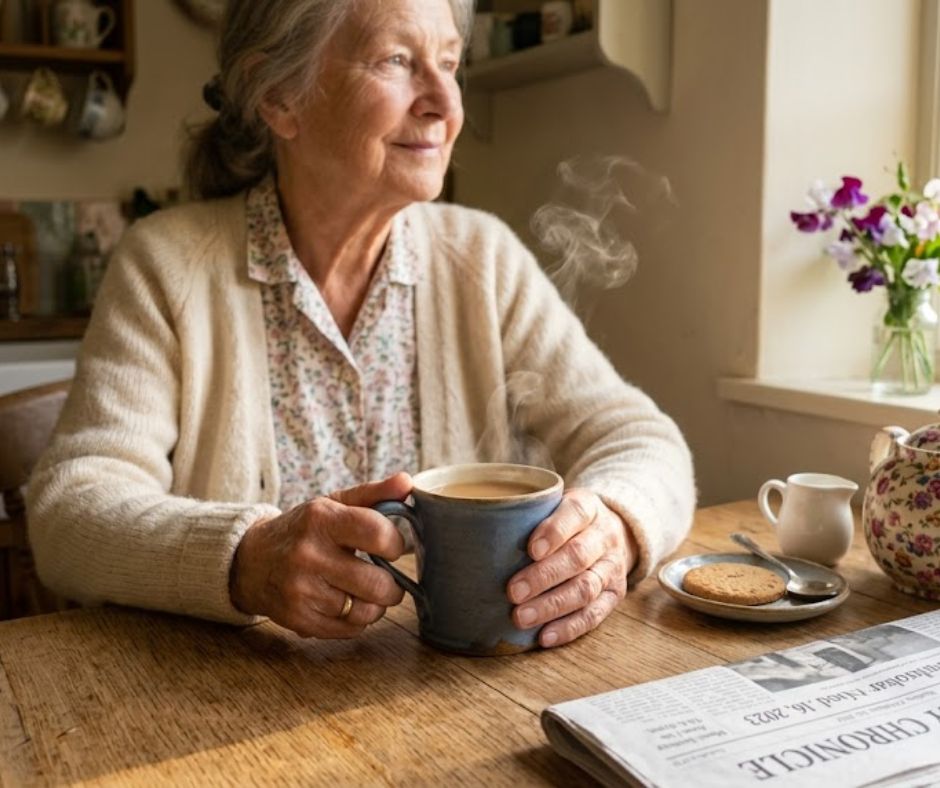
There are few things more quintessentially British — and more quietly comforting — than a good cup of tea. It marks the beginning of the day, punctuates the afternoon, and softens the evening. It welcomes visitors, mends bad moods, and fills the small pauses between one task and the next. For older adults especially, tea is often woven so deeply into the fabric of daily life that we barely notice its importance. But the humble cuppa is far more than just a warm drink. It’s a ritual, a comfort, and a small daily act of care — for ourselves and for others.
A Nation Built on Tea
For generations, tea has been the reliable backbone of British life. It has been served through wars, weddings, funerals, and family arguments. It has been the first thing offered to a shocked friend, the last thing sipped before bed, and the diplomatic solution to almost every awkward moment. “I’ll put the kettle on” is, in truth, one of the kindest sentences in the English language.
For anyone who has lived through decades of this quiet national custom, tea carries memories with it — of grandparents’ kitchens, of mothers at the sink, of tea trolleys at work, of long chats with friends now gone. Each cup is, in its way, a small link to a lifetime of moments.
The Ritual Itself Matters
Part of the magic of tea lies in the ritual of making it. Filling the kettle. The gentle roar as it comes to the boil. Warming the pot, or reaching for a favourite mug. Watching the tea darken. Adding milk. The whole process is a small, mindful pause — a moment of doing something familiar and satisfying, with a comforting reward at the end.
Psychologists have long noted that rituals, even small ones, provide structure, comfort, and a sense of control. In a world that can sometimes feel unpredictable, the reliable comfort of a well-made cup of tea offers something quietly grounding.
Genuine Wellbeing Benefits
Beyond the emotional comfort, tea has real, measurable benefits. Black tea contains antioxidants that support heart health. It contributes to daily fluid intake — important for older adults, who are more prone to dehydration than they realise. The gentle warmth of a hot drink can ease sore throats, soothe digestion, and take the edge off a chilly afternoon.
Herbal teas offer their own quiet virtues. Chamomile can help with relaxation and sleep. Peppermint eases digestion. Ginger warms the body and settles unsettled stomachs. There’s a herbal tea for almost every gentle need, and exploring them can be a small pleasure in itself.
Tea as a Bridge to Connection
Perhaps most importantly, tea brings people together. Few phrases in British life carry more warmth than “shall I pop the kettle on?” It’s an invitation to stop, sit, and talk. It signals welcome, hospitality, and unhurried time.
For older adults who live alone, offering a cup of tea to a visitor — a family member, a neighbour, a carer — is a small but meaningful act of hosting. It restores the familiar rhythm of being someone who welcomes others rather than only receiving them. And receiving a well-made cup of tea in return is a small daily gift, offered as much for the warmth of the gesture as for the drink itself.
Making a Truly Good Cup
Everyone has their own view of what makes a perfect cup of tea, and none of them are wrong. But a few small touches genuinely lift the experience. Freshly boiled water rather than reboiled. A pot warmed with a little hot water first. Good-quality tea, whether loose leaf or bagged. Time to brew — three to four minutes for black tea. Milk (or not) to personal taste. And, crucially, drinking it while it’s still properly hot, from a mug or cup that feels right in the hand.
In Conclusion
A good cup of tea is a small thing, but it is never only a small thing. It is comfort, ritual, connection, and quiet joy — all held in a warm mug between the hands. At Lakeshore Care, we know that the small daily pleasures often matter most, and few are as universally loved as the humble cuppa. Whatever else the day brings, a good cup of tea, made with care and enjoyed unhurriedly, is a moment well spent.