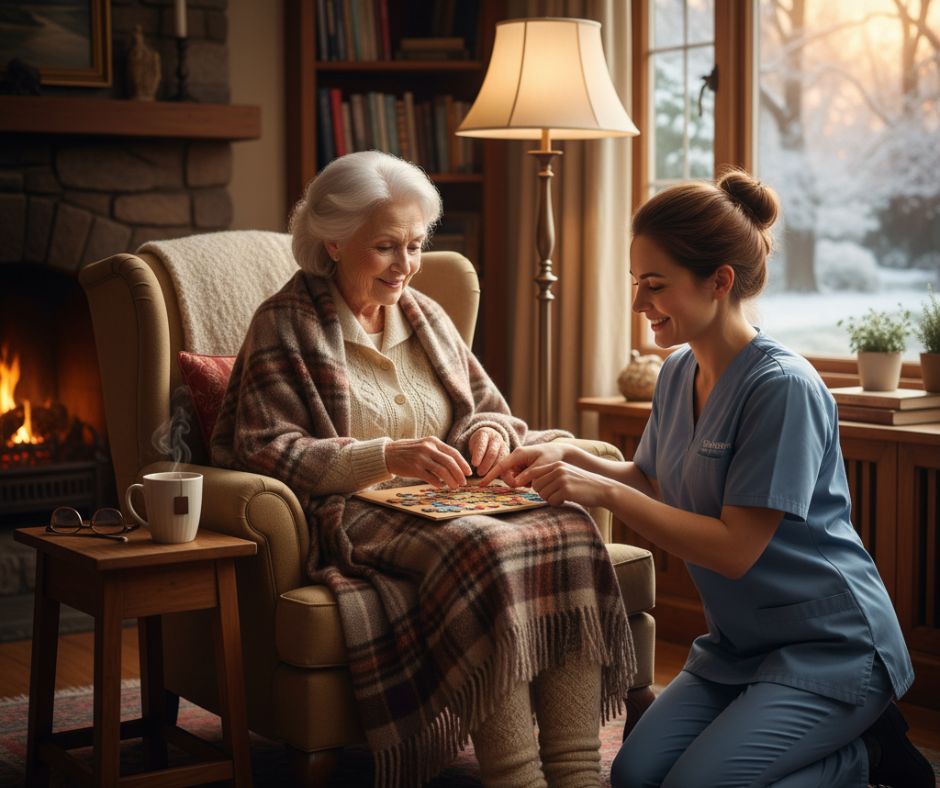
As the leaves turn golden and the air grows crisp, there’s a certain charm to the colder months. Cosy evenings by the fire, warm drinks, and the anticipation of festive seasons. However, with the beauty of autumn and winter comes a unique set of challenges, especially for older adults. Shorter days, colder temperatures, and potentially icy conditions can impact both physical and mental well-being. At Lakeshore Care, we believe that with a little preparation and mindful action, you can embrace the colder months safely and happily, maintaining your independence and comfort in your cherished home.
Keeping Warm and Well
One of the most immediate concerns during colder weather is staying warm. It’s not just about comfort; it’s about health. Exposure to cold can exacerbate existing health conditions and lead to serious issues like hypothermia.
- Layer Up: The simplest advice is often the best. Wear several thin layers of clothing rather than one thick one. This traps warm air more effectively and allows you to adjust if you get too warm indoors. Don’t forget warm socks, slippers, and a hat, even inside if you feel a chill, as a significant amount of body heat can be lost through the head and feet.
- Heat Your Home Smartly: Ensure your heating system is in good working order before the cold truly sets in. Keep your main living areas warm, ideally between 18-21°C (64-70°F). Use draught excluders for doors and windows, and consider closing curtains at dusk to trap heat inside. If you’re concerned about heating costs, explore government support schemes or local grants that might be available to help.
- Warm Drinks and Meals: Hot drinks like tea, coffee, or hot chocolate can provide internal warmth. Nourishing, warm meals such as soups, stews, and porridges are not only comforting but also provide essential energy to help your body generate heat.
Preventing Winter Falls
Icy pavements and wet leaves can turn a simple walk into a dangerous undertaking. Falls are a major concern in colder months, but many can be prevented with a few precautions:
- Footwear Matters: Invest in sturdy shoes or boots with good grip. Avoid smooth soles. When going outside, be mindful of where you step, looking out for black ice which can be almost invisible.
- Clear Your Path: If you have a path or driveway, try to keep it clear of leaves, snow, and ice. A sprinkle of salt or grit can make a big difference. Our caregivers can often assist with light outdoor tasks like this, ensuring your immediate surroundings are safer.
- Stay Active Indoors: Maintaining strength and balance is crucial. Gentle indoor exercises, such as chair yoga or simple stretches, can help keep your muscles and joints flexible. This can reduce your risk of a fall, even if you’re less active outdoors.
- Lighting is Key: As discussed in previous posts, good lighting is paramount. Ensure outdoor lights are working, and consider installing motion-sensor lights for dark pathways. Indoors, use nightlights to illuminate routes to the bathroom or kitchen.
Staying Connected, Even When You Can’t Go Out
Shorter days and colder weather can sometimes lead to feelings of isolation. It’s vital to stay connected to maintain good mental health.
- Maintain Social Connections: Keep in touch with family and friends regularly, whether through phone calls, video chats, or letters. If you usually attend community groups, see if they offer online alternatives or if there are local services that provide transportation.
- Embrace Indoor Hobbies: Rediscover old hobbies or explore new ones. Reading, puzzles, knitting, crafting, or listening to music can be wonderfully engaging and help pass the time happily.
- Caregiver Support: Our Lakeshore Caregivers are not just there for practical tasks; they are companions. They can provide conversation, help you connect with loved ones using technology, or even join you in an indoor activity. We can assist with getting you to appointments or social events when conditions allow, and provide vital company on days when you prefer to stay in.
- Check-ins and Reassurance: Let family and friends know your winter plans. Establish a system for regular check-ins. Knowing someone is looking out for you can offer immense reassurance. Our care plans can include regular visits, providing consistent company and ensuring your well-being.
Embracing the colder months safely and happily is entirely achievable. By focusing on warmth, fall prevention, and maintaining social connections, you can continue to thrive in your own home, enjoying all the unique charms that autumn and winter have to offer.