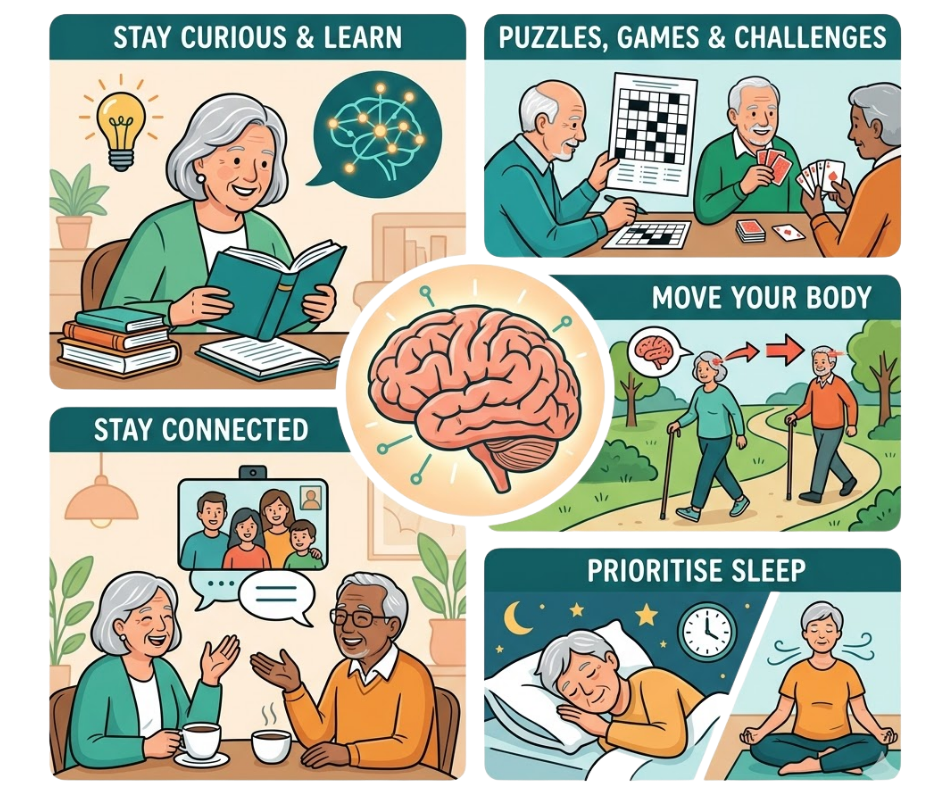
The brain is remarkable. Even well into later life, it retains a capacity to adapt, learn, and grow that scientists once thought impossible. While it’s true that some changes in memory and processing speed are a normal part of ageing, the evidence is increasingly clear that the daily choices we make have a significant influence on how well our minds age. The good news is that supporting cognitive health doesn’t require expensive programmes or complicated regimes. Often, the most effective habits are also the simplest.
Stay Curious and Keep Learning
One of the most powerful things you can do for your brain is to keep giving it new things to think about. Learning stimulates the growth of new neural connections — a process known as neuroplasticity — which helps the brain remain flexible and resilient over time. This doesn’t mean enrolling in a degree course, though that’s certainly an option. It might mean trying a new recipe, picking up a craft you’ve never attempted, exploring a subject through library books, or simply watching a documentary about something you know nothing about.
Curiosity, it turns out, is one of the brain’s best friends.
Puzzles, Games and Mental Challenges
Crosswords, sudoku, card games, chess, word searches, jigsaws — these familiar pastimes are genuinely beneficial, not merely a way to pass the time. Activities that require concentration, strategy, and problem-solving exercise the brain in ways that passive activities cannot. Even better, many of them are social — playing cards with a friend or family member combines mental stimulation with human connection, doubling the benefit.
If traditional puzzles don’t appeal, don’t worry. Any activity that requires focus and active thinking counts. Learning the words to a new song, following a knitting pattern, or memorising a poem all engage the brain in similarly valuable ways.
Move Your Body to Sharpen Your Mind
The connection between physical activity and cognitive health is one of the most well-established findings in modern medicine. Regular movement increases blood flow to the brain, supports the growth of new brain cells, and has been shown to reduce the risk of dementia. You don’t need vigorous exercise to benefit — a daily walk, some gentle stretching, or even chair-based exercises can make a meaningful difference.
The key is consistency rather than intensity. A short walk every day will serve your brain far better than occasional bursts of activity separated by long periods of inactivity.
Prioritise Sleep and Manage Stress
Sleep is when the brain does much of its essential maintenance work — consolidating memories, clearing waste products, and restoring the systems that keep us functioning well. Chronic poor sleep has been linked to an increased risk of cognitive decline, making good sleep hygiene one of the most important — and most overlooked — habits for brain health.
Equally, chronic stress takes a measurable toll on the brain over time. Finding ways to manage worry and maintain emotional balance — whether through relaxation, gentle breathing exercises, faith, creative activity, or simply talking things through with someone — protects both mental and cognitive health.
Stay Connected
Social interaction is, perhaps surprisingly, one of the strongest protective factors for cognitive health. Conversation requires the brain to listen, process, respond, and remember — all at once. Regular meaningful contact with others, whether family, friends, neighbours, or community groups, keeps these faculties active and engaged in a way that solitary activities simply cannot replicate.
Even a daily phone call or a regular coffee with a neighbour contributes more to brain health than many people realise.
Keeping your mind sharp is less about grand interventions and more about the quiet accumulation of good daily habits. Curiosity, movement, rest, connection, and a willingness to keep challenging yourself — these are the foundations of lasting cognitive health. At Lakeshore Care, we support the people in our care to live fully engaged, stimulating lives at home, because we know that a mind that is active and valued is one that continues to flourish.