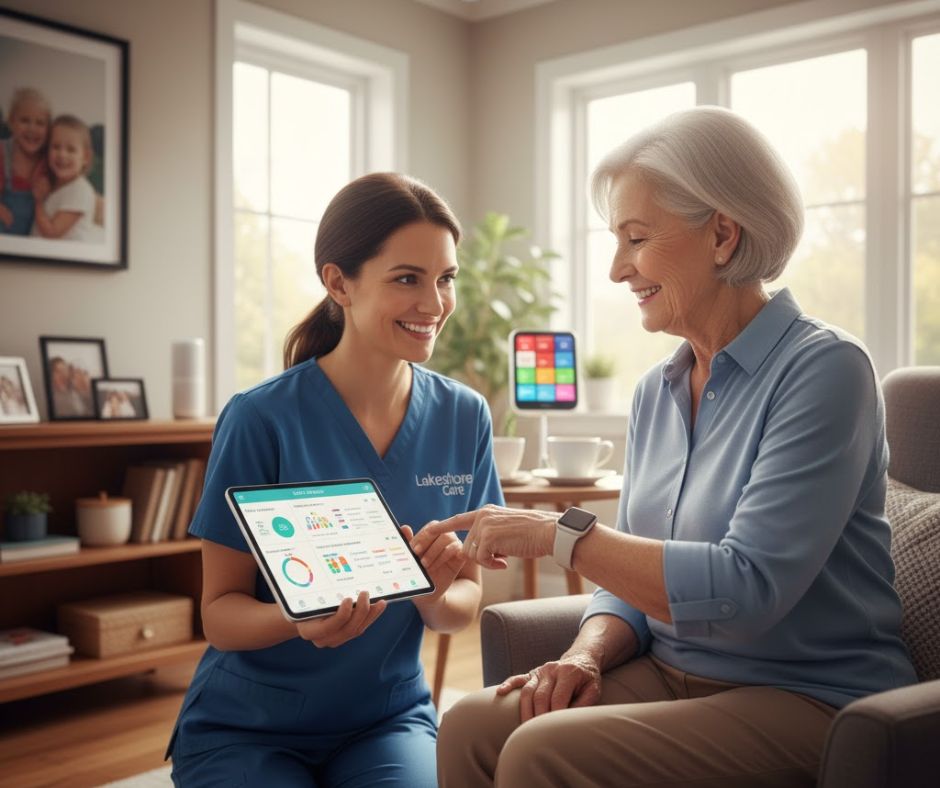
The landscape of home care is changing, driven by incredible advances in technology. The desire for older adults to “age in place”—to remain safe and independent in their own homes—is stronger than ever. Fortunately, technology is no longer a futuristic concept in care; it’s a practical reality that is enhancing safety, providing peace of mind, and allowing for a more proactive approach to well-being. At Lakeshore Care, we are embracing these innovations to provide smarter, more connected, and truly person-centred care.
Smart Monitoring and Enhanced Safety
The primary goal of technology in home care is often safety. Devices now exist that can monitor a person’s environment and health in a non-intrusive way, offering crucial early warnings.
- Wearable Technology: These devices, such as smartwatches or simple pendants, go far beyond basic Personal Emergency Response Systems (PERS). Modern wearables can track heart rate, sleep patterns, and activity levels. Most importantly, they feature advanced fall detection. If a fall occurs, the device automatically alerts a caregiver or emergency services, even if the person is unable to press a button. This instantaneous response drastically improves outcomes.
- Smart Home Sensors: These are subtle and effective. Small sensors placed around the home can monitor daily routines without cameras. For example, they can track whether the refrigerator door has been opened, if a person has left the bedroom, or if they have spent too long in the bathroom. A deviation from the normal routine—such as not opening the fridge by mid-morning—can trigger an alert, allowing caregivers to intervene before a crisis occurs. This level of remote monitoring provides an unparalleled layer of security.
Enhancing Care and Communication
Technology is also transforming the relationship between the care recipient, the caregiver, and the family.
- Medication Management: Smart pill dispensers are a game-changer for those managing multiple medications. These devices lock the medications and only dispense the correct dose at the exact scheduled time. They also send alerts to caregivers if a dose is missed, significantly reducing the risk of errors and missed medications.
- Virtual Check-ins and Telehealth: Video calling and dedicated telehealth platforms are making healthcare more accessible. Caregivers can conduct virtual check-ins with clients who are generally well, saving time and travel. Furthermore, clients can have video consultations with their doctor or nurse without leaving the comfort of their living room, making it easier to manage chronic conditions.
- Digital Care Plans: Our caregivers use digital platforms to record care notes in real-time. This means families can access up-to-date information on their loved one’s care, diet, and mood instantly, fostering transparency and trust. It creates a seamless communication loop between the care team and the family.
The Human Touch Remains Essential
It’s vital to stress that technology is a tool, not a replacement for human connection. The future of ageing is not about machines taking over; it’s about technology supporting and empowering the human element of care.
By handling the routine monitoring and emergency alerts, smart devices free up our Lakeshore Caregivers to focus on the meaningful parts of their job: companionship, emotional support, and engaging activities. Technology makes the care smarter and safer, allowing the caregiver’s time to be spent on the “little things” that make life special—sharing a cup of tea, tending to a hobby, or simply being a listening ear.
The ultimate goal is to use these innovations to support independence, delay the need for residential care, and ensure a higher quality of life for every individual ageing in their own home.